Showing posts with label veganism. Show all posts

9/23/10

Annie, get your gun...

Today I am going to attempt to wade through the murky, potentially dangerous topic of hunting. I should add, that members of my family are hunters and this is not intended to look down upon them or judge them. I just love them too much. :)


Hunting. Yes, I'm well aware that it is the season. I would probably forget about it, but I am always reminded when I log onto Facebook and see status update after status update from other friends about it. Even worse, when I see a picture of someone with a dead animal. Blech.

The topic of hunting was usually never black and white for me. And now, even as much as I despise it, it still isn't black and white. Perhaps I should explain.

One of my first memories tied with hunting was when my father came home with a dead deer. I remember walking out and seeing it hanging in our shed behind our house. I was horrified. I ran away and hid from my dad behind the couch in our living room. It scared me to death.

Of course, fast forward to several years later, and I had accepted it. When my father, brothers, and cousins would go hunting and bring home an animal, I would stare at it in awe. I would love to see how pretty those animals were, even if they were dead.

When I was 12 or so, I thought about taking hunters safety because it seemed like such a fun thing to do. I wanted to go hiking up in the mountains and look for animals. However, the man in charge happened to call me in the middle of my nap one Friday afternoon. He wanted to know whether or not I intended to come to the class. For me, it was an easy answer. I was tired and it sounded really boring at the time, so I said no.

I should note though, that through all this time I always fished. Whenever we went on family trips, we would pack all our fishing poles. Fishing never seemed to bother me much, at least not as much as hunting initially did.

As time wore on, I got accustomed to the life of living in a family of hunters. It wasn't until after I graduated and left my parents' house that I started to question and seriously think twice about it again. There wasn't a certain event that steered me in this direction, at least as far as I can remember. But there was always this nagging feeling and it just didn't sit well with me.

A month or two before I met Mark, I was hanging out with another guy who loved to hunt. He would talk about it all the time. Once again, that nagging feeling came back up and I told him that I didn't think that hunting was right. He thought I was crazy. I couldn't keep seeing him because I knew that things just wouldn't work out. I needed to date someone who didn't prefer to kill animals.

Then I met Mark. One year after that, I started on the path to veganism.

Of course, as the years have gone on, I have heard various hunting stories and seen plenty of pictures. At first, they were really upsetting. Once the suffering of animals is put to the forefront of your concerns, it is amazing how much seeing even a dead squirrel can make you mad.

I wrote an article for a magazine journalism class that really made me question and wonder what the role of animals should be in our lives. Was it our responsibility to keep their populations in check? Was it our responsibility to kill ones who are considered diseased or invasive species? Was it our right to kill them if we needed food?

The answer to the latter question took a while for me to figure out. Even now, I know it isn't a simple answer and it is far from black and white. I know there are many people who are pro-hunting who think that I've "gone PETA" and who think that I care more about animals than humans.

The truth of it to me is that hunting has a place. It has a purpose. I understand the need for someone to go hunting when they are poor and they have a family to feed over the winter. I understand the need to go hunting when there is nothing else to eat. Do I understand the need to go hunting to see who can get the biggest deer or elk? Absolutely not.

In fact, we read in the scriptures, "Wo be unto man who sheddeth blood or that wasteth flesh and hath no need." (D&C 49:21)

Over the years, my view of hunting has gone from complete disgust to an almost mild acceptance. I have learned that in comparison with factory farming, wild animals really are better for you to eat (if in fact, you must eat meat). And the people who hunt actually know where their food is coming from and aren't afraid to do the job themselves. That part I can tolerate.

I think that in our culture, hunting has been glamorized. Walk through any Cabela's or Sportsman's Warehouse and it's obvious. Every now and then my family would get the biggest hard-bound Cabela's catalog that I've ever seen whose size trumps that of the Bible.

I understand though--hunting is fun for some people. Even I used to love going up to deer camp in the fall and sitting around the fire. When it got cold, I would go into the canvas tent with the fire and stay warm. I've never actually hunted, but that part was fun enough to me.

So now that I've said that hunting has a place, is it really needed? Is it really worth all the money (sometimes thousands of dollars for some tags) just to kill an animal? I guess that is very questionable and the answer will change depending on who you talk to. Many people say that hunting is needed to control animal populations. To me, a simple answer is that we feel we need to control animal populations because we also hunt the predators of these animals, too. I think nature does a very good job of balancing everything out when just left to itself.

I'm not sure why I feel the need to post something about this, other than to say that the over-killing and over-glamorization of hunting is really bothers me. If someone needs to hunt to survive, then fine. But I don't think that the competition of seeing who can take the largest or most exotic animal is right. If someone really needs food, then why be picky? Why kill an animal if there is no intent to eat it?

This is a hard topic to confine to one post, and my thoughts have been so scattered lately that I hope you don't mind if it isn't well written. Whenever I see mindless and glorification of killing animals, one quote by President Brigham Young comes to mind: "Not one particle of all that comprises this vast creation of God is our own. Everything we have has been bestowed upon us for our action, to see what we would do with it--whether we would use it for eternal life and exaltation, or for eternal death and degradation."

8/2/10

Animal Rights: Reintroduced.

Can I share something with you? Really, a deep dark secret that I've hidden for awhile and I don't know if I can keep it in any longer.


I'm not sure if I like veganism. I'm not sure if I like vegans.

This distaste has been lingering in my mouth for awhile. It might have started late last year with the release of Jonathan Safran Foer's book "Eating Animals." I haven't read the book, but I was really excited to see it released and get so much mainstream attention. I cheered as I read his personal story about his path to vegetarianism. I cheered as people gave it great reviews.

Then, I came across an extremely critical review by a fellow vegan whom I was friends with on Facebook and following on Twitter. Basically, his article said, "Oh, that's great you're vegetarian. But you are not close to doing enough." I am desperately searching for the article, but I can't find it. (ah ha! I found it.) I was so put off, I sent him a tweet rebuking his nasty commentary, and I rarely tweet at all. I quickly found that I was not the only one giving him grief for doing so. Another female vegan had joined in and was questioning his harsh comments on the book.

Basically, we were both telling him that it was unfair for him to criticize Foer for saying that veganism is hard. Because for him, the critic, it must have been completely easy. He would not rest his case and kept insisting that Foer was a horrible proponent of animal rights. Oh, how foolish of us to think otherwise!

After that incident, I remember thinking, This is ridiculous. I remember questioning if I still wanted to be clumped together in the same group and stereotype of people as this man. After all, we were after the same goal, weren't we? We are all for giving animals their rights, so why were we all pointing fingers?

I wondered if this guy knew anything about progression and the act of trying to make oneself better. Any step towards progression is not black and white, not all or nothing in a heartbeat. There are hurdles, there is questioning. There are struggles and there are times when you feel like an outcast.

Veganism is extreme, I get it. It seems elitist. It seems rude, pushy, and preachy. And for this man to sit and tell everyone else it was going to be the easiest thing in the world was such a joke to me. There were so many times when I felt so guilty for passing up someone's birthday cake, and for turning down the many meals so many people had prepared for me. Then there were the countless times that I felt like such a hassle when someone would go out of their way to make a meatless/dairy-free version of the food that they were making for everyone else. I was always very thankful, but I always felt so bad for making them do that. I remember one instance where I went to visit my brother and he had made chicken and dumpings for my sisters and me. I don't think he was aware of my veganism at the time, but after I finally got up the courage to tell him that I didn't eat meat, he let me pick a can of soup out of his cupboard that I could eat for lunch with his family. The guilt I felt over this was enormous, for SO many reasons. I still feel bad about it to this day.

I would think to myself in such occasions, Oh, why don't you just eat it so you don't offend anyone. But then I would also think, But if you eat this, they are going to think that you are okay with eating it and then it's hypocritical of you to turn it down from someone else.

I should probably be clear here: my choice to eat food free from animal products was relatively easy outside of social situations. Piece of cake, even. And my family was supportive of my choice and did not hassle me about it. I do know, however, that some of my extended family thought I was crazy and wondered what the heck happened to me. Sometimes you can just feel those things without any words being spoken.

And I should probably also be clear about another thing. As of right now, I'm no longer vegan. My transition to Germany has proven a challenging one on my diet. I could tell you a million reasons why, but I think it's pretty self explanatory when you live in a country whose people eat salami for breakfast and who has a dairy section to trump any other food section in their grocery stores. All the foods that I used to eat back home and regularly relied on for sustenance and health are a challenge to find. And that includes basics like good beans and fresh vegetables.

And another thing: my love and passion for animal rights was put on a definite back burner. I stopped listening to my favorite vegetarian podcast. I stopped reading about it constantly. My interest for it died. Interests replaced other interests and soon my lifestyle had changed. I stopped seeing dairy and eggs as the most heinous things and started buying them again. I wondered what I was doing and where I was going. I ate fish a few times.

Some of you might be thinking, Oh suck it up and just eat some meat/dairy/eggs already. It's not that big of a deal. Stop complaining and overanalyzing.

Am I telling myself the same thing? It's hard to say. Sometimes I feel like it. Sometimes, I think that it wouldn't be that big of a deal if I went back to some of my old habits.

Fast forward to tonight. Mark and I are sitting around his computer trying to decide what to watch. We stumble upon Discovery's Shark Week and start watching a few shows. As one ends, Mark asks what other one I would like to watch. "Oh, Saving Sharks," I say.

Instantly, a guy appears on the screen and is talking about his efforts in saving sea turtles. He explains that fishing is contributing to their declining numbers. Then he talks about one guy who goes aboard a longline fishing boat to see how many sea turtles are killed because of the practice. Then it cuts to footage of a shark who got hooked on a longline being hauled up and over the side of the boat. A fisher grabs a long knife and proceeds to hack off one fin. "Oh Mark, please stop it," I say. Mark doesn't. He sits and watches with disgust on his face as the fisherman hacks off the other fin and perhaps another (I closed by eyes for a moment). I open my eyes to see the fisherman shove the helpless animal off the side of the boat. The animal lands back in the ocean completely alive and even more helpless. It can't move and it will die a slow painful death. Although the man explains that the footage of that poor helpless shark actually ignited a movement within Costa Rica to place some of the strictest rules on fishermen, I sat there sick to my stomach.

I had learned in my Oceanography class about the deep and huge impacts of fishing on the oceans of the world. My teacher had taken the time to explain the various problems one day and had also included plenty of pictures. I decided then and there that I would never contribute to that heinous industry again. And yet, here I sat.

I have. I did. I forgot my promise.

The road to discovery and improvement is riddled with bumps and detours. A million times you might ask yourself, Do I know what I'm doing? Can't I go back to being comfortable again?

But then again, where would humans be without progress? Is it good to make a promise to ourselves, to make a commitment and to back out on it or take the easy route? Am I really comfortable when I know I should and could be doing better?

We make promises to ourselves. We strive to be better. We have ethics that we strive to keep and feel disappointed when we let ourselves down.

For that reason, I have to keep pushing through the gray. My promise might have been forgotten, but it's definitely not lost.

7/28/10

A Belated Oregon Vacation.

Today I was going through the tedious process of salvaging some photos off my Facebook when I realized that I never blogged about our Oregon trip. Thankfully, I uploaded about 70 photos from our trip to Facebook, so I could save them to my computer. Phew! Flipping through those photos really made me happy. We had such a fun trip.


Mark and I decided to go to Oregon because, well, it's one of my favorite places in the whole wide world and he's never been there before. My family used to go there every year, but because of my parents' mission and my school I hadn't been there for about 5 years. It was high time to go back! This was also the time when Mark found out that the internship in Munich wasn't going to work and we didn't know if we were going anywhere for the summer. So needless to say, we needed a break. We packed up the car over spring break and headed for the coast!


Welcome to Oregon!

Blech. Nasty snow in the Blue Mountains. Exactly what my dad warned me about. This section of our trip was definitely white knuckles on the steering wheel. The scariest part was going down the summit because the road was so steep. Boy, was I relieved when we finally made it out and down into the valley where it was raining!

Headed towards the Columbia. A break in the clouds. After this, I took a few pictures of the turbines along the Columbia River, then it was took dark to take any more. We made it to our hotel in Portland around 9 p.m. and were so excited for the next day!

Mark down by the Columbia River in Portland. We went to investigate the Saturday market in the city center.

Gorgeous.

I was so excited to see green grass, blooming trees, and clear skies after being stuck in Logan for the winter. Logan has nasty inversions and black snow that won't melt in March.

The "Made in Oregon" sign is behind there somewhere.

One part of the market.

After that, we made our way to Sweetpea Baking Company (a vegan bakery) and had a delicious lunch. It was so overwhelming to eat somewhere were I actually could eat any item if I wanted to. It was so hard to pick, but I decided on a vegan chickpea melt (supposed to be like a tuna melt). It was so good. Mark got a double stacker grilled cheese. Then I picked up a carrot cake cupcake on the way out. Yum!

After that, we decided to go to Multnomah Falls because we didn't know if we would have time for it later in the trip.

We accidently came across the old highway that runs between the current freeway and the mountain. It was gorgeous and I'm so glad we found it.

We also found Wahkeenah Falls, something else I'd never seen!
We hiked up to see it closer.

Then we went to see Multnomah!

A bearded Mark! It's so weird to see him with a beard. I'm so used to him being clean shaven for his internship now.

The next day we drove to Astoria. What a cute town!

Looking out to where the Columbia almost meets the Pacific.

The Astoria Tower

The Columbia and the Pacific Ocean!

The views from up top are phenomenal.

Of course, I had to get in some shots of Astoria, too.

It sure was windy up there. The only reason there's just a picture of me is because Mark was scared of getting anywhere near the railing and basically clutched the building the whole time. haha! Oh Mark. Soon after, we walked back down the tower and were safely on the ground again. :)

Ocean ho!

Next stop was Seaside. We had fun walking around the shops and strolling the beach.


After several unsuccessful attempts at a taking our own picture by the ocean, a nice lady came by and offered to take our picture for us. Thanks, kind lady!

Seaside beach


Canon Beach!


Mark and the coast!

This is one of my favorite stops along the coast. You can see so much.

Oceanside!


Cape Meares lighthouse. Some morons decided it would be cool to shoot out the windows and even the lens inside. :(


Then we made our way to Pacific City. I love this place! Here is Cape Kiwanda.

Mark took off his shoes so he could venture out in the ocean. This was his first time, and I think he's a little skeptical!

So cold!


We walked to the other side of the sand dunes and watched the waves for awhile. This is where my shoe almost took a fateful dive off the cliff into the ocean, but Mark climbed under the fence and rescued it for me. We had this all on video because it happened while I was filming the ocean, but sadly, it is lost. :(

Tierra Del Mar, where we usually stay in our relative's beach house.

The next morning as the sun was rising, we stopped by Cape Kiwanda to say goodbye before we headed home.

We had such an amazing trip and I'm thankful that I could salvage these photos from Facebook. There is something so amazing about the Oregon Coast that I don't think I can ever get enough of. It's a combination of the relaxed attitude, the nice people, the cool air, the green forests and the ocean that just make it so magical.

3/25/10

Veganism is a rocky road sometimes.

I don't think that veganism was something that I chose. In many ways, I think it found me.


Take for example, the first time I listened to what was soon to be my favorite podcast. After searching through piles of podcasts on iTunes, I came across it and thought, "That seems like a good podcast to listen to about being healthy." And so I downloaded an episode titled, "The High Costs of Cheap Meat" thinking it was going to talk about stuff like hot dogs and chicken nuggets. I must have been really opposed to processed meat at the time.

As the voice rambled on, I remember thinking, This woman is crazy. So much of it went over my head that after I turned off my iPod about 15 minutes into the episode, I didn't remember much except for her saying something about veganism.

Months and months went by until I decided to listen to more of those podcasts at work. I downloaded a few more and was instantly hooked. I liked her message and it seemed to fit in my beliefs, something I believe I had swept under a rug and ignored for some time.

There was the time when my family decided to raise broiler chickens and I had to help the process of--ahem--killing them. Believe me, I had no emotional attachment to those chickens in any way, shape, or form. In fact, I think I was still a little bitter about being attacked by one of my brother's roosters several years before. Still, the image of what happened that day will forever be tattooed in my brain. Did that stop me from eating meat at the time? No.

A few times I had gone with my family fishing and I remember feeling bad for the poor fish that were hauled up out of the water on the end of my line. I got used to seeing the dead animals my family would bring in after they hunted and it got to the point where I didn't think twice about it. Yet, at the same time, I had pretty passionate beliefs that an animal shouldn't be killed "just because."

I almost went vegan a few years after high school. My roommate had discovered a diet called macrobiotic, and I liked it. I believed intensely one of the main messages: what you eat translates directly to how your body looks, feels, and operates. My roommates uncle came over to our apartment one day and was teasingly calling us "vegans." Even though it is a vegan diet per se, I got a little offended.

As I've mentioned in a previous post, veganism was still a hard decision for me, and at times it continues to get harder. I spent so many years closed and blocked to the idea of animal suffering that when I realized just how wide spread and horrible it is, it was devastating.

You see, no one tells you when you are younger that in the egg industry, male "egg-laying" chicks are killed shortly after birth because they are considered useless. No one tells you how extensive and horrible the fur industry is, and it's even worse to find out that some main culprits are even miles away. The feeling of knowing all this is overwhelming and you feel deceived. But let me tell you, what's almost worse than knowing is the feeling that if you try to inform someone else of what you think would be useful information to them (because it was for you) they don't want to listen. They don't want to know.

Your eye to animal suffering is opened. This is something so hard to explain until you truly feel it for yourself.

One day, on the way to work, I saw a cop pulled off the side of the road with his lights on. As I glanced over to see what happened while Mark drove on, I saw a deer that had been hit and crippled in the middle of the road. He was sitting upright, but obviously could not walk or get away. I saw the look on his face, and I'll never forget it. I cried the whole way to work and for most of the first hour.

The truth is, life gets more complicated the more you care about things. There are many times when almost wish I could go back to being ignorant about it all and wishing that would take be back to "bliss." That way, I wouldn't experience tensions between some extended family members, getting stressed when I see images or hear people talk about abusing and killing animals, running into articles online about how horrible the meat and dairy industries are, avoiding 99% of the food at family and friend get-togethers and feeling guilty about it, and the feeling that sometimes you just aren't making a difference.

I sincerely hope this post isn't depressing you entirely (if you are still reading)...

What makes it worth it though, is looking into an animal's eyes and being able to see its soul. (Hey now, stop that eye-rolling!) I'm being serious. You stop seeing animals as units and start seeing them as beings that exist for their own reasons and have their own reasons to live. They want to breathe clean air, run, and be free like we are. And you feel it.

Often, I've had friends tell me, "I was watching (insert random show involving animals of some sort) and it reminded me of you! I know you would love it." Or, "I saw something that was vegan the other day and I thought of you!"

Maybe someone is listening, after all.

9/10/09

Cheap Vegan Meals--Harvest Pasta

So...I've only posted one "Cheap Vegan Meal."


I'm such a slacker.

But I have a new one for you today! I made it up for dinner. I don't have any photos or prices to list for you, because I got most of the veggies from my garden. So my dinner was pretty much free. If you have tons of tomatoes, zucchinis, or other garden veggies hanging around you should whip this up. Pretty fast, easy and tasty, too.

Harvest Pasta

3 tablespoons olive oil
4-5 cloves of garlic, minced (seriously!)
2-3 medium sized zucchinis, chopped in half then sliced
20-25 cherry tomatoes, sliced in half or 3-4 normal tomatoes, chopped
1/2 teaspoon dried basil
1/2 teaspoon dried oregano
1 can of corn (optional)
salt and pepper to taste
1/2 lb. angel hair pasta

Heat large saute pan to medium-high heat. At the same time, add enough water to a large stock pot to boil. In the saucepan, add oil, then sliced zucchinis. Let saute for about 2-3 minutes, then add garlic. Be careful not to let it burn. Let saute for about 5 more minutes. Add tomatoes, basil, oregano, salt and pepper. At this time, add angel hair pasta to boiling water and let cook until tender (angel hair cooks up pretty fast). Let saute for another 5 minutes, or until skin comes off tomatoes and they break down to form a thin sauce. Add drained can of corn (if you want to). Saute for another 3 minutes or until corn is heated through. Add drained, cooked pasta and toss to mix.

6/12/09

Veganism and the Gospel

I've been debating whether or not to post this article. This was something that I wrote for a magazine writing class last fall. I've been debating because I'm afraid it might rub off as too "in-your-face" or too pushy. Please keep in mind that my intention when I wrote this was merely to inform how my veganism fits in with the doctrine of my church, not necessarily a persuasive article. Nonetheless, if you read it, I hope you like it. If it seems a little familiar, I based it off a previous post about animals and the gospel. After writing that article, I decided that I wanted to go more in depth with the topic and do some research, so here's the result. 

Deciding to become vegetarian and eventually vegan was not easy. I had only met a few other vegetarians throughout my life, one of whom was a girlfriend of my brother's. I was little at the time, but I remember my bewildered family wondered what to give her for dinner. Growing up, I was sheltered when it came to other ways of eating and I never questioned what I ate on a daily basis.

But as I learned more about how animals are treated in this world, I couldn't go back to living that way again. Knowing I had to change my habits was an uncomfortable feeling. I couldn't keep going down the same path, because it would cause inner turmoil. At first, I went the route of vegetarian by cutting meat out of my diet. After a few months, I decided to become vegan, making the transition to remove all animal products from my daily meals. This transition was stressful because I felt disloyal and that I would somehow be alienated from my family and friends. Growing up in rural Idaho, veganism rubbed off on me as being taboo.

This was probably because my family's traditions are deeply rooted around animals. My mother grew up on a dairy farm and my father raises beef cattle. It is custom in my family to hunt and fish and most of our vacations are centered around fishing. Because I was raised this way, meat was a staple food in my house. It was something readily available.

While I was making this change and told people about my lifestyle choice, one argument I constantly heard was, "The purpose of animals are for us to use, Candice." I have always questioned this statement. I do not believe a certain animal was created only to give us their meat or milk. Yet, I had always learned that we had dominion over the animals and they were here for us "to use" because it supposedly says so in the scriptures. So if I don’t believe animals were only created for me to use, does that not make me a Christian? This question was eating away at me, so I started searching.

It was in my online searches for someone—anyone—who thought like I did that I found Christopher Foster, a philosophy instructor at BYU. Foster, a vegetarian, has compiled a PowerPoint lecture titled "Mormonism and Animal Rights—Harmony or Contradiction?" He has presented this at various locations across Utah, including Salt Lake Community College and Brigham Young University. His lecture is packed with quotations and scriptures stressing the need to end useless killing of animals. Foster believes we should "only eat them if we have need." He also states that it is against the basic ethical principle to cause suffering when the benefits do not outweigh the misery caused.  "The suffering caused by factory farming (where the vast majority of American meat comes from) is so extreme that the need required in order to balance that out must also be extreme—it would have to be necessary for our lives," says Foster.

The Word of Wisdom seems to agree with this. In Doctrine and Covenants chapter 89, we read in verse 12: "Yea, flesh also of beasts and of the fowls of the air, I, the Lord, have ordained for the use of man with thanksgiving; nevertheless they are to be used sparingly." Verse 13 expands on the word sparingly by stating: "And it is pleasing unto me that they should not be used, only in times of winter, or of cold, or famine."

Even though the Word of Wisdom states to eat it sparingly in times of winter or famine, do we really need to eat meat at all? Doctrine and Covenants 49:21 states: "And wo be unto man that sheddeth blood or that wasteth flesh and hath no need." Industrialization has provided many ways for us to obtain different varieties of foods, including a wide array of fruits and vegetables. As Foster points out in his presentation, "Today, we have ample vegetarian food available year round." There are plenty of alternative protein sources, such as beans, nuts, and seeds. We are blessed to have such an abundant food supply, especially in this country. We definitely don't live in a country of famine. 

According to a January 2008 article in The New York Times titled, "Rethinking the Meat Guzzler" by Mark Bittman, Americans, on average, consume nearly double the average of meat than the rest of the world. This is vital when taken into account that, according to the same piece, nearly 800 million people worldwide suffer from hunger or malnutrition. The majority of the world’s corn and soy are fed to chickens, pigs and cattle. In her book "Diet for a Small World," Frances Moore Lappe says, "For every 16 pounds of grain and soy fed to beef cattle in the United States we only get 1 pound back in meat on our plates." She then points out, "If we exclude dairy cows, the average ratio of all U.S. livestock is 7 pounds of grain and soy to produce 1 pound of edible food."  A similar number was found on the Environmental Health Perspectives website. A Research Review explains that it takes seven pounds and about 2,400 gallons of water to produce one pound of feedlot beef. When this feed is given to animals instead of people, it is taking away land, food and water that could have been helped to prevent starvation of these suffering people. For me, these statistics raise serious questions about whether we are optimizing what we have been given to better the lives of our fellow beings. Is our exploitation of these resources really justifiable? Do we really consider the damage we are doing to these creatures?

"Animals are like children in a sense that they are innocent and under our dominion," Foster said. "Everyone knows deep down that kindness to animals is necessary." He believes kindness to animals is spiritually, environmentally and ethically essential. "There are literally billions raised and killed in the most brutal ways for our appetite preferences and their suffering is as real as ours. We are hypocrites for ignoring them and thereby causing their misery," he says. We are clearly not showing compassion for animals by killing them when it isn’t necessary.

Many church leaders have expressed their feelings on this topic, basing their beliefs on the scriptures. One slide in Foster’s presentation includes this quote from Joseph Fielding Smith: "There is no inference in the scriptures that it is the privilege of  men to slay birds or beasts or to catch fish wantonly. The Lord gave life to every creature…Therefore to take the life of these creatures wantonly is a sin before the Lord." It is a fundamental belief in Christianity that God gave man dominion over animals. In Genesis chapter one we read that God created the earth and the creatures upon it, and more specifically in verse 28, we hear: "…God said unto them, Be fruitful, and multiply, and replenish the earth, and subdue it; and have dominion over the fish of the sea, and over the fowl of the air, and over every living thing that moveth upon the earth." But what is the extent of our dominion?

"Adam’s dominion was a charge to see to it that all went well with God’s creatures; it was not a license to exterminate them," Hugh Nibley said in the book "Kindness to Animals and Caring for the Earth" by Richard D. Stratton. This quotation along with others seem to suggest there is righteous and unrighteous dominion that can be practiced over the earth.

One slide on Foster’s presentation discusses unrighteous dominion by using a quote from the February 1912 edition of the Juvenile Instructor. In this citation, Joseph F. Smith points out, "The dominion the Lord gave man over the brute creation has been, to a very large extent, used selfishly, thoughtlessly, cruelly." Foster also adds: "We are utterly indifferent to the suffering we cause to so many beings. This is about as unrighteous as dominion gets."

In my research it was surprising to find that Joseph Smith was an advocate of kindness and respect to animals. Gerald E. Jones includes a story about Joseph Smith in his article "The Gospel and Animals" in the August 1972 edition of the Ensign. During the Zion’s Camp expedition in summer 1834, Joseph Smith tells the story of how they found three rattlesnakes in their tent. Some brethren were about to kill them but Joseph Smith said, "Let them alone—don’t hurt them!" and instructed the brethren to take them across the creek. He also explicitly told them not to kill another creature unless it was absolutely required to prevent them from starving to death.

Another prophet, Spencer W. Kimball, expressed his beliefs on the unnecessary killing of animals in the October 1978 LDS Conference by stating: "And not less with reference to the killing of innocent birds is the wildlife of our country that live upon vermin that are indeed enemies to the farmer and mankind. It is not only wicked to destroy them, it is a shame, in my opinion. I think that this principle should extend not only to the bird life but to the life of all animals."

I had believed this all my life, but never quite made the connection between the 
animals that died and the food I ate. The turning point was one weekend when I went home to visit my parents. I went with my nieces to see the newborn calves in my father’s pasture. One calf, full of curiosity, cautiously came up and stood in front of my nieces and me. He stood there for a few moments, staring and sniffing. My eyes welled up with tears because I knew this calf, innocent and pure, was only born to die.

Although it’s easy to only blame the meat industry for what happens to livestock, it is important to know unnecessary killing and abuse of animals exists in every animal industry. For example, the veal industry is directly tied to the dairy industry. A USDA Fact Sheet entitled "Veal from Farm to Table" states, "Male dairy calves are used in the veal industry. Dairy cows must give birth to continue producing milk, but male dairy calves are of little or no value to the dairy farmer." The calf is taken away from its mother so the cow can be milked. Continuous pregnancies play a heavy role on the health of the cow and if its production levels drop below profit, the cow is slaughtered.

The main reason why milk is consumed is to get the calcium our body needs. However, milk is not the best and only way to get that calcium. According to an article entitled "Calcium and Milk: What’s Best for Your Bones?" published by the Harvard School of Public Health: "Milk is actually one of many sources of calcium—dark leafy green vegetables and some types of legumes are among other sources…" To me, it makes sense to get calcium from plant sources, where the cows get theirs.

The same goes for egg-laying chickens. Little regard is taken for the lives of birds in this industry. A fact sheet on the American Egg Board's website states: "As the hen ages, egg quality declines and, at about 18 to 20 months of age, molting occurs and egg production ceases. While some flocks are sold for slaughter at this point, replacement is costly. A fairly common practice is to place the flock into a controlled molt. " Controlled molting is defined in Wikipedia as the artificial practice of the industry to force chickens to lose feathers and weight. In order to lose weight, feed is taken away for up to two weeks. In addition to this, most chickens are confined to small areas and cages. Since these birds are used as production plants, we should always be mindful of their health and well-being.

We have always been taught that we, as members of the LDS church, need to take care of the beautiful earth we have been given. Stratton's book includes one of my favorite thoughts by Ezra Taft Benson on this subject. Benson says: "Whatever mortal reasons there are to be concerned about [the] environment, there are eternal reasons, too, for us to be thoughtful stewards. President Brigham Young said: 'Not one particle of all that comprises this vast creation of God is our own. Everything we have has been bestowed upon us for our action, to see what we would do with it—whether we would use it for eternal life and exaltation, or for eternal death and degradation.'" Kindness to animals and taking care of our earth are one in the same; damage one and you damage the other.

Going back to the article by Bittman, referring to large animal production plants, states: "These assembly-line meat factories consume enormous amounts of energy, pollute water supplies, generate significant greenhouse gases and require ever-increasing amounts of corn, soy and other grains, a dependency that has led to the destruction of vast swaths of the world's tropical rain forests." Senior UN Food and Agriculture Organization official Henning Steinfeld confirms this in an article entitled "Livestock a Major Threat to Environment" released by the United Nations.  Steinfeld states: "'Livestock are one of the most significant contributors to today's most serious environmental problems.'" Harvesting livestock is not the only practice that damages the environment. Overfishing is a serious threat to the ecosystems of the world's oceans.


According to the United Nations article "Overfishing: a threat to marine diversity," one in five people are dependent on fish as their primary source of protein. UN agencies state this is damaging because aquaculture, the stocking and farming of aquatic organisms, is increasing more swiftly than other food producing sectors. "According to a Food and Agriculture Organization (FAO) estimate, over 70% of the world's fish species are either fully exploited or depleted," the article states.

On an individual level, we might not harm the environment much by eating animal products. However, collectively, we are doing serious harm. Foster offers a quotation by Brigham
Young that says, "If we maltreat our animals, or each other, the spirit within us, our traditions, and the Bible, all agree in declaring it is wrong."As children of our Heavenly Father, we know it is our sacred stewardship to protect what He has so abundantly blessed us with. We should not be selfish; but I believe we should be grateful for everything that He gives us. I see veganism as a means to be thankful for these blessings and to make sure that others can do the same.

Ovid the poet, in the book "Metamorphoses," once rhymed: "Take not away the life you cannot give, For all things have an equal right to live." I couldn’t agree more.


5/22/09

Okay, Friends!

How was it? Who skipped the meat? Who ate tons of veggies? And above all...


Who felt fabulous eating this way? ;)


P.S. If you did the challenge, don't forget to leave a comment! First person gets first pick of the two, second person gets the other. And let me know how your week of healthiness went. Oh! And don't forget to leave your email address, preferably as a second comment so I can delete it. I wouldn't want my email floating around cyberspace, so I don't want yours to do the same! :)
Thanks. 

4/4/09

Where do you get your protein?

"Where do you get your protein?"


"Candice, are you getting enough protein?" 

"I think you should eat animal proteins."

Introducing the inevitable vegetarian Mount Everest: conquering the protein myth. Although now, since I'm vegan, I've had many other questions thrown my way about my diet, this is still probably number one. 

It's completely understandable, too. It seems like the nutrient that is most emphasized by the media is protein. Lean proteins, high-quality proteins, animal proteins, vegetable proteins...blah blah blah. It's enough to make anyone confused, like many other aspects of nutrition. 

Now that I think about it, before I was vegan I knew very little about protein. I did think that certain types were better than others, and always strived to eat lean proteins like chicken and fish over others like beef, pork, and eggs. I never really knew why I was eating it other than I had heard my body needed protein. How much and where from, I didn't really know. 

Here's the thing about being a vegan; you need to know your stuff. When I first made the decision, I was bombarded with questions, one of the hardest to answer was the question about protein. Being new at veganism, these questions would always leave me fumbling for answers and feeling frustrated. Little thoughts would pop into my mind saying, "Do you really know what you're doing, Candice?"


I didn't. At least not at the beginning. I distinctly remember someone throwing the "complete protein" argument at me and I couldn't defend it. I decided that day, then and there, that I would have to read up on every aspect of nutrition if I was going to be a vegan, be a healthy vegan, and be a good ambassador of this lifestyle. There's something about being a vegetarian or vegan that makes people ask all sorts of questions about your diet, when you've never been asked them before. In my opinion, we all should be asking and answering these questions, regardless of our sources of nutrients. 

Back to proteins.  So when did Americans start placing a large emphasis on proteins in our diet? It might have started back in 1914, when a series of experiments were conducted on some rats. In this study, two groups of rats were fed two different types of protein. One group was fed animal protein and the other plant protein. The group that was fed animal protein grew larger and faster than did the other group. The conclusion was almost obvious; animal protein seemed superior to plant protein. 

Further studies conducted in the 1940s narrowed it down to 10 essential amino acids (now it is only eight) for growth in rats, this made up a "complete protein." These amino acids are called "essential" because our bodies need them but can't make them. This is why, for many years, animal proteins have been considered superior to plant proteins--because they are a single-source complete protein. There was however, several flaws in these experiments. One being that it was not conducted on humans. 

When I started reading up on proteins, one thing struck me that I never realized before: all foods have amino acids. In other words, all foods have structures to make a complete protein, some just have higher amounts than others. Some plant foods when paired together, make a complete protein, such as beans and rice. Frances Moore LappĂ©, author of Diet for a Small Planet, was the first to talk about this idea of complementary proteins in her book. She suggested eating complementary proteins at one sitting, instead of at different times. 

In some ways, this complicated things about protein. People were confused and it gave people the idea that you had to have an infinite knowledge about plant proteins and what went together, and what not. However, after further research had been conducted she restated her claim by saying that it was no longer necessary to eat complementary proteins at one meal but that our bodies were capable of synthesizing the amino acids from varying plant proteins and using them as a complete protein source. 

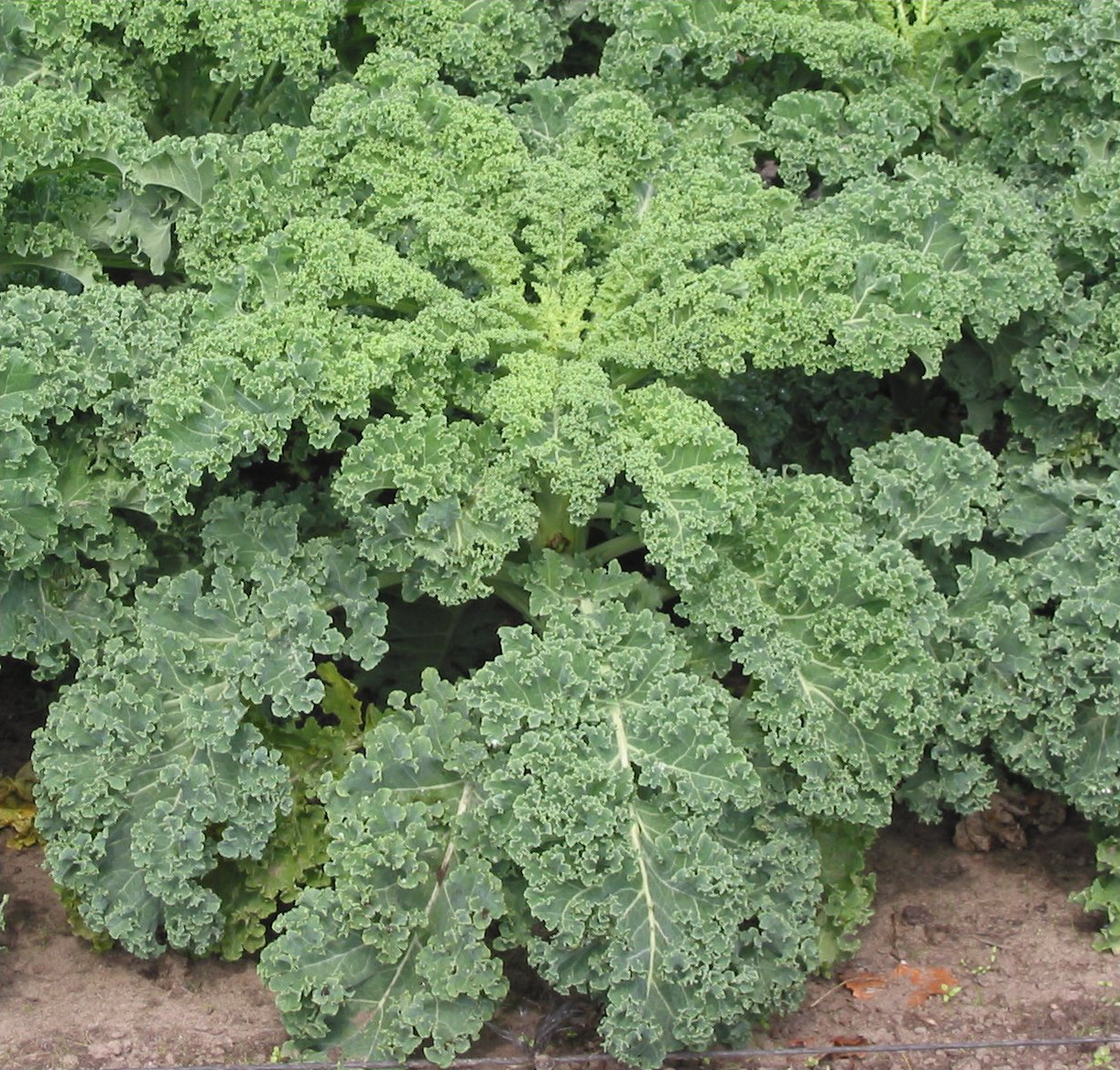
Now it is common to think of vegetarian sources of protein as beans, nuts, and grains. This is very true, but there is protein in vegetables, too! For example, did you know that one cup of raw kale and and one cup of tomatoes both have two grams of protein per serving? I know that I didn't before I was vegan. 

So now that you know there's amino acids in virtually every food that we consume, how much protein do we need? Relative to total calorie intake, we only need 5-6% of dietary protein to replace the protein that our body uses. Even human breast milk, important to babies in the times when they grow and develop the most, has 5% dietary protein per caloric amount. 

The amount recommended for adults by the government is constantly changing, thus fueling the debate over protein. The Food and Nutrition Board has the responsibility every few years to review and update current dietary recommendations. In the book, The China Study, the 2002 review is quoted directly, so I'll quote it here:

                 "To meet the body's daily energy and nutritional needs while minimizing 
               risk for chronic disease, adults should get 45% to 65% of their calories from
               carbohydrates, 20% to 35% from fat and 10% to 35% from protein..."

Does anyone else find this extremely confusing? Why the huge varying amount, in 10 to 35% in protein? Americans, on average, consume nearly double the recommended amount, in the range of 11-21%. So if we are already consuming double what we need, then why is it recommended that we can consume up to 35% of our calories as protein? 

I can tell you that consuming that much protein, especially animal protein, is only a recipe for disaster (I'll talk about that in a minute). However, there is a problem with consuming too little protein. This results in a medical condition known as kwashiorkor. This is pretty easy to recognize and we just don't see it here in America. Remember seeing pictures of starving children in Africa on commercials with poor bloated bellies? That's kwashiorkor--lack of protein. 

In fact, with a few exceptions, if people are getting their recommended caloric intake of the day, they are most likely getting enough protein. It is only when a diet is full of sugary, junk foods or when there simply aren't enough calories that this is a problem. It is easy to get enough protein on a whole foods, plant-based diet. 

Excessive amounts of protein, particularly animal protein has been linked to cancer, gout, kidney problems, osteoporosis, and other medical conditions in our body. Let's take osteoporosis for example. Among other things that can certainly play a role in causing this disease, one strong link has been excessive amounts of animal protein. This happens because animal proteins increase the acidity in our blood. In order to compensate and make our blood neutral, our body leeches calcium from our bones. 

The animal protein-fed rats in the 1914 study, although they were large and appeared healthy, soon started to develop numerous health problems. 

Recent studies have shown that vegetable sources of protein are not only as good as animal proteins, but they are better. Many of the largest civilizations on earth, such as the Mayans, Chinese, and Indian civilizations are based largely on plant foods and they are thriving (well, in the case of the Mayans, they thrived). 

I think there is too much confusion around nutrition in America. With the recent Atkin's and South Beach diets, people are left confused as to what really is good for their bodies. I admit, reading up on nutrition sometimes makes you want to rip your hair out, with all the debates and various sides. 

I will say this: plant proteins, unlike animal proteins, have plenty of additional nutrients to offer when you consume them. There are a few grains out there that are a source of complete proteins, such as quinoa and buckwheat. When you eat these proteins, not only are you ingesting complete proteins, but you get tons of fiber (something you won't find in animal products), folate, iron, magnesium among other things. And they're free from cholesterol and saturated fats. 

Amid all the confusion and hype over proteins, I hope I've helped to clear this up a little. I think from now on, you know where I'll be getting my protein. 

And where do you get your protein? It's up to you.